

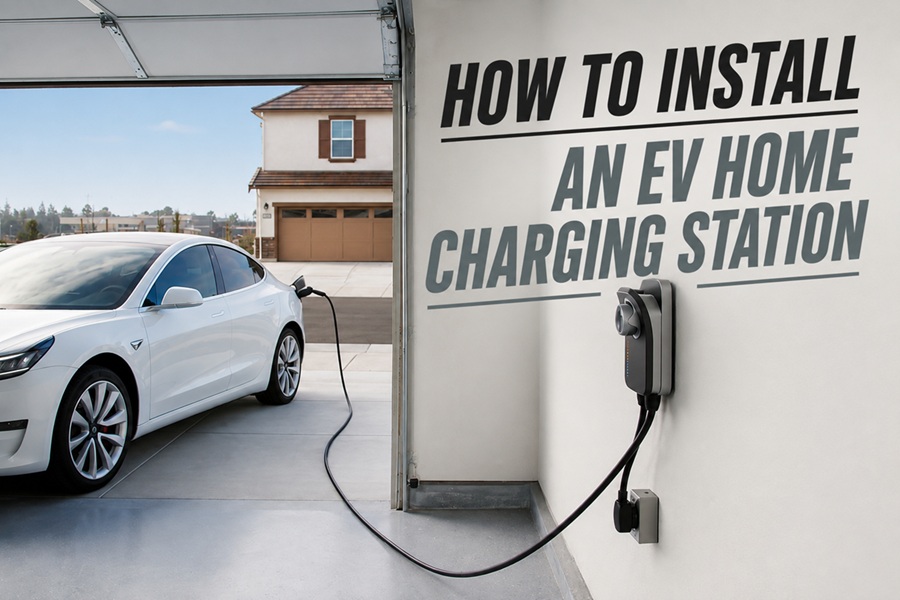

To install an EV home charging station, you decide between a slower Level 1 charger that plugs into a standard outlet and a faster Level 2 charger that needs a dedicated circuit, choose your charger and a good location, and for a Level 2 setup, hire a qualified electrician to install the dedicated circuit and mount the unit safely and to code. For most homeowners, a Level 2 home charging station is the goal, since it charges far faster and makes topping up overnight easy, but because it involves significant electrical work, the installation itself should be done by a professional rather than as a DIY project. The homeowner’s job is really to plan the setup, choose the right charger and location, confirm the electrical capacity, and hire a qualified electrician, resulting in convenient, reliable home charging for your electric vehicle.
Charging your electric vehicle at home is one of the biggest conveniences of EV ownership, letting you wake up to a full battery without trips to public chargers. Setting up a home charging station is very doable, but it helps to understand the process and the choices involved. This homeowner’s guide walks through how to install an EV home charging station, from choosing your charger to hiring an electrician, the process, costs, and key considerations.
| First choice | Level 1 outlet charger or faster Level 2 |
| Most homeowners want | A Level 2 home charging station |
| Level 2 needs | A dedicated circuit and professional install |
| Your job | Plan, choose the charger and location, hire a pro |
| Installation | Done by a qualified electrician |
| Confirm | Your electrical panel can support the charger |
| Also handle | Permits and inspection as required |
| Result | Convenient, reliable home charging |
Level 1 vs Level 2 Home Charging
The first decision in setting up home charging is choosing between Level 1 and Level 2, since this shapes everything else. Level 1 charging simply uses a standard household outlet, requiring no special installation, but it charges slowly, which may be fine for low daily mileage but is often too slow for many drivers. Level 2 charging is much faster, making it the popular choice for home charging, but it requires a dedicated higher-power circuit and professional installation.
For most EV owners, a Level 2 home charging station is the goal, because it can replenish the battery far faster, easily topping up overnight, and makes living with an EV genuinely convenient. Level 1 can work as a basic or backup option, especially for plug-in hybrids or low-mileage drivers, but if you want fast, convenient home charging, Level 2 is the way to go, and it is what most home charging station installations involve.
What You Need for a Home Charging Station
Setting up a Level 2 home charging station involves a few key components and requirements, and understanding them helps you plan the project. These are the pieces that come together for home charging.
- A Level 2 EV charging station, or charger unit, suited to your vehicle and needs
- A dedicated higher-power circuit installed from your electrical panel
- Sufficient electrical panel capacity to support the charger, or a panel upgrade
- A suitable location to mount the charger, ideally near where you park
- Any permits required for the electrical work in your area
- A qualified electrician to perform the installation
Why You Should Hire a Professional
While it is tempting to treat a home charging station as a DIY project, the installation of a Level 2 charger should be done by a qualified electrician, and understanding why is important. Installing the dedicated circuit involves significant electrical work, connecting a high-power circuit to your electrical panel, which carries real risks of fire and shock if done incorrectly and must meet electrical code. A professional ensures the charger is wired and installed safely and correctly, sized properly for your system, and compliant with code and permit requirements. This protects your home and family, ensures reliable charging, and often matters for warranties and insurance. Given the stakes, hiring a qualified electrician for the installation is the right approach, while you handle the planning and choices around it.
The Installation Process
From a homeowner’s perspective, installing a home charging station follows a general sequence, most of which centers on planning and hiring the right professional. Knowing the steps helps you navigate the project.
- Decide on Level 2 charging and choose a charger suited to your vehicle and needs.
- Choose a location for the charger, ideally near where you park.
- Hire a qualified electrician to assess your electrical panel and the installation.
- Have the electrician confirm your panel can support the charger, or upgrade it, and obtain permits.
- The electrician installs the dedicated circuit, mounts the charger, and wires it to code.
- The installation is tested and inspected as required, and you start charging at home.
Understanding the Costs
The cost of installing an EV home charging station varies based on your specific situation, so it helps to know what drives it. The main factors are the charger itself, the complexity of the electrical work, which depends on the distance from your panel to the charger location and whether your panel needs upgrading to handle the added load, plus permits and local labor rates. A straightforward installation near an adequate panel costs less than one requiring a panel upgrade or a long wiring run. Because these factors vary widely, getting quotes from qualified electricians is the best way to understand your costs, and confirming what each quote includes lets you compare fairly. The convenience of home charging generally makes the investment well worthwhile for EV owners.
Key Considerations
A few considerations help you plan a home charging station that fits your needs and home. Thinking through these in advance leads to a better setup. Consider your daily driving and charging needs to choose the right charger and confirm Level 2 makes sense for you. Think about the best location for the charger, balancing convenience with a shorter, simpler wiring run from your panel. Confirm your electrical panel’s capacity early, since a needed upgrade affects cost and scope. Consider charger features you might want, such as connectivity or scheduling. And factor in permits and inspection requirements. Planning around these details, with a qualified electrician’s input, results in a home charging station that is convenient, reliable, and suited to your home and vehicle.
Frequently Asked Questions
Can I install an EV home charging station myself?
A Level 1 charger simply plugs into a standard outlet, but a Level 2 home charging station involves significant electrical work installing a dedicated circuit, which should be done by a qualified electrician for safety and code compliance. Your role is planning and choosing, not the electrical installation.
Do I need a Level 2 charger at home?
For most EV owners, a Level 2 charger is worthwhile because it charges far faster than a standard outlet, making overnight top-ups easy and convenient. Level 1 can suffice for low-mileage drivers or plug-in hybrids, but Level 2 is the popular choice for practical home charging.
Will my electrical panel support an EV charger?
It depends on your panel’s capacity and existing load. A qualified electrician assesses whether your panel can handle the charger’s added demand or needs upgrading. Confirming this early is important, since a needed upgrade affects the cost and scope of the installation.
How much does home EV charger installation cost?
It varies with the charger, the complexity of the electrical work, the distance from your panel, whether a panel upgrade is needed, permits, and local labor rates. Getting quotes from qualified electricians is the best way to understand your specific costs.
How long does it take to install a home EV charger?
The installation itself is often completed in a matter of hours for a straightforward setup, though the overall timeline includes assessment, obtaining permits, and any needed panel upgrade, which can add time. A qualified electrician can give you a timeline for your specific installation.
Final Thoughts
Installing an EV home charging station is one of the best ways to make electric vehicle ownership convenient, letting you charge easily at home. The key choices are opting for a faster Level 2 charger, selecting a good location, and confirming your electrical panel can support it, while the installation itself, involving a dedicated circuit and real electrical work, should be handled by a qualified electrician for safety and code compliance. Your job as a homeowner is to plan the setup, make the right choices, and hire a professional. Do that, and you will enjoy the convenience of waking up to a fully charged EV at home.