

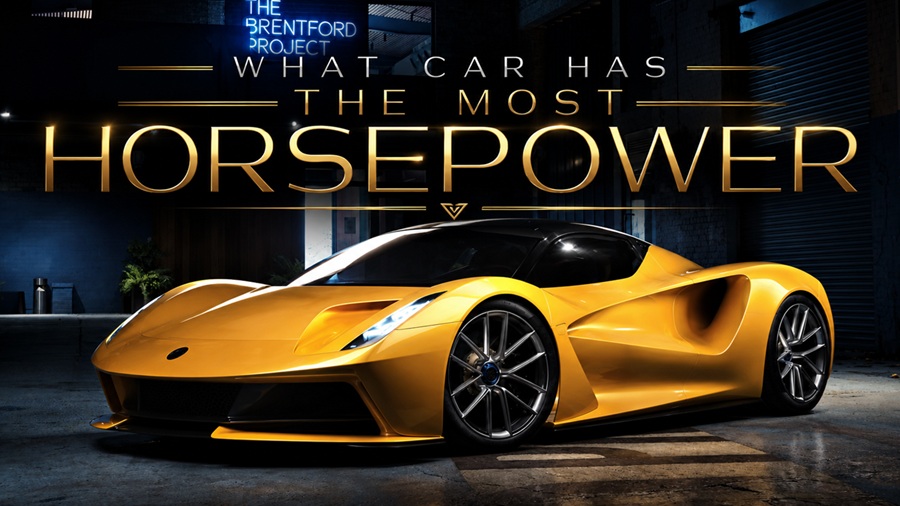

The car with the most horsepower right now is generally considered to be the Koenigsegg Gemera, with a claimed output of around 2,300 horsepower when equipped with its twin-turbo V8 hybrid powertrain and running on E85 fuel. That number is almost hard to believe, especially when you remember that not long ago, 1,000 horsepower was considered the peak of production-car performance.
But the horsepower race is moving quickly. Electric hypercars like the Rimac Nevera R, with about 2,107 horsepower, are close behind. Other extreme machines, including the Pininfarina Battista, Hennessey Venom F5, and Bugatti Tourbillon, also sit near the top of the performance world.
The answer to “what car has the most horsepower?” can change as new hypercars are announced, tested, and delivered. Still, based on current figures, the Koenigsegg Gemera is the standout leader.
The Current Horsepower Champion: Koenigsegg Gemera
Koenigsegg is known for building some of the fastest and most advanced cars in the world, and the Gemera may be its most surprising creation yet. On paper, it is a hypercar with around 2,300 horsepower, but unlike most cars in this category, it has four seats.
That is what makes the Gemera so unusual. It is not just an extreme two-seat track-focused machine. Koenigsegg designed it as a “mega-GT,” meaning it combines massive performance with enough space for passengers and luggage. In theory, you could take it on a road trip with family or friends, though it still delivers performance numbers that belong in the world of hypercars.
The most powerful version uses a twin-turbocharged V8 engine combined with electric motors. This hybrid setup allows the car to produce an extraordinary amount of power while also delivering instant electric torque. When running on E85 fuel, the Gemera reaches its highest claimed output of about 2,300 horsepower.
That puts it at the top of today’s production-car horsepower rankings.
Rimac Nevera R: The Electric Hypercar Close Behind
If the Koenigsegg Gemera represents the hybrid side of the horsepower race, the Rimac Nevera R represents the electric future. With around 2,107 horsepower, it is one of the most powerful production cars ever made.
Rimac, based in Croatia, has become one of the most important names in electric performance. The Nevera uses a quad-motor setup, meaning each wheel is powered by its own electric motor. This allows the car to deliver huge power and extremely precise control.
Electric cars have a major advantage when it comes to acceleration. Electric motors can deliver torque instantly, without waiting for engine revs to build or turbos to spool. That is one reason EV hypercars have become so dominant in performance discussions.
The Nevera R is not just about big horsepower. It is also about how that power is managed. Advanced software controls the motors, traction, and torque delivery, helping the car put its power to the ground as efficiently as possible.
Pininfarina Battista: Italian Style With Rimac Power
The Pininfarina Battista is another electric hypercar with extreme horsepower. It produces around 1,900 horsepower, using technology closely related to the Rimac Nevera.
What makes the Battista different is its character. While Rimac focuses heavily on engineering and technology, Pininfarina brings Italian design and luxury into the mix. The result is a car that combines breathtaking electric performance with elegant styling.
With nearly 2,000 horsepower, the Battista is far beyond what most drivers will ever experience. It can accelerate with shocking force, yet it is also designed to feel refined and exclusive. It shows how electric power is changing not only performance numbers but also the identity of luxury hypercars.
Hennessey Venom F5: Old-School Power, Modern Extremes
Not every horsepower leader is electric or hybrid. The Hennessey Venom F5 keeps the traditional combustion-engine formula alive with a massive twin-turbocharged V8.
The Venom F5 produces more than 1,800 horsepower, depending on the version, and is built with top speed in mind. Hennessey designed the car to be light, powerful, and aerodynamically efficient.
Unlike electric hypercars, the Venom F5 delivers its power in a more mechanical, old-school way. There is engine noise, turbo boost, gear changes, and the drama of a high-powered combustion engine. For many enthusiasts, that emotional experience still matters.
The Venom F5 proves that gasoline-powered hypercars are not finished yet. Even as EVs rise, combustion engines continue to compete at the highest level.
Bugatti Tourbillon: A New Hybrid Era for Bugatti
Bugatti has long been associated with extreme power. The Veyron helped make 1,000 horsepower famous, and the Chiron pushed the numbers even higher. Now, the Bugatti Tourbillon moves the brand into a new hybrid era.
The Tourbillon uses a naturally aspirated V16 engine paired with electric motors, producing around 1,775 horsepower. That makes it one of the most powerful production cars in the world.
What stands out about the Tourbillon is that Bugatti did not simply follow the trend of going fully electric. Instead, it created a hybrid system that preserves the drama of a high-revving engine while adding electric performance.
For Bugatti, horsepower is only part of the story. Luxury, craftsmanship, top-speed stability, and engineering detail are just as important. Still, with nearly 1,800 horsepower, the Tourbillon easily belongs among the world’s most powerful cars.
Current Horsepower Leaders
Here is a simple look at some of the most powerful production cars currently known:
| Car | Approx. Horsepower | Powertrain |
|---|---|---|
| Koenigsegg Gemera | 2,300 hp | Twin-turbo V8 hybrid |
| Rimac Nevera R | 2,107 hp | Fully electric, quad motor |
| Pininfarina Battista | 1,900 hp | Fully electric |
| Hennessey Venom F5 | 1,800+ hp | Twin-turbo V8 |
| Bugatti Tourbillon | 1,775 hp | V16 hybrid |
These numbers may shift as manufacturers release new versions, special editions, or updated performance claims. Hypercar brands are constantly competing to push the limits.
How Did Horsepower Get So High?
The rise in horsepower over the past 20 years has been dramatic. In the early 2000s, the Bugatti Veyron shocked the world with around 1,000 horsepower. At the time, that figure seemed almost impossible for a road car.
Today, 1,000 horsepower is still impressive, but it is no longer the top of the mountain. Several production cars now exceed 1,500 horsepower, and the most powerful models are crossing the 2,000-horsepower mark.
There are two main reasons for this growth: hybrid technology and electric power.
Hybrid systems allow automakers to combine combustion engines with electric motors. The engine provides high-speed power and character, while the electric motors add instant torque and extra output. This creates performance that would be difficult to achieve with an engine alone.
Electric vehicles have also changed the game. EV motors can produce huge power without the same mechanical complexity as traditional engines. A car with multiple electric motors can generate incredible horsepower and control torque at each wheel with precision.
That is why so many of today’s horsepower leaders are electric or hybrid.
Is Horsepower the Same as Speed?
Not exactly. Horsepower is important, but it does not tell the whole story.
A car with the most horsepower is not always the fastest in every situation. Real performance depends on several factors, including weight, aerodynamics, traction, gearing, tires, and how power is delivered.
For example, a lighter car with less horsepower may feel quicker on a tight road or race track than a heavier car with more power. A car with better aerodynamics may achieve a higher top speed even if it has slightly less horsepower. Traction also matters. If a car cannot put its power to the ground, the number on paper becomes less useful.
This is especially true with extremely powerful cars. Once you get beyond 1,500 or 2,000 horsepower, managing the power becomes just as important as producing it.
Are High-Horsepower Cars Becoming More Accessible?
The most powerful cars in the world are still extremely expensive. Models like the Koenigsegg Gemera, Rimac Nevera, and Bugatti Tourbillon cost millions of dollars and are produced in limited numbers.
However, high horsepower is becoming more accessible than it used to be. Electric performance cars have made huge power available at lower prices than traditional hypercars.
Some electric sedans and performance EVs now produce around 1,000 horsepower or more. They are still expensive compared with normal cars, but they cost far less than million-dollar hypercars. They also offer acceleration that would have been almost unthinkable in a street car a decade ago.
This shift means horsepower is no longer reserved only for exotic brands. Electric technology has brought serious performance to a wider audience.
Final Thoughts
So, what car has the most horsepower? Right now, the Koenigsegg Gemera is generally the leader, with around 2,300 horsepower from its twin-turbo V8 hybrid powertrain. Close behind is the Rimac Nevera R, an electric hypercar producing about 2,107 horsepower.
The bigger story is how quickly performance has evolved. Hybrid and electric technology have pushed production cars far beyond the once-mythical 1,000-horsepower mark. Today’s most powerful cars are not just fast; they are showcases of engineering, software, battery technology, aerodynamics, and design.
Still, horsepower is only one part of performance. The best cars combine power with control, balance, braking, traction, and driver confidence. The biggest number may win the headline, but the complete package is what makes a car truly great.