

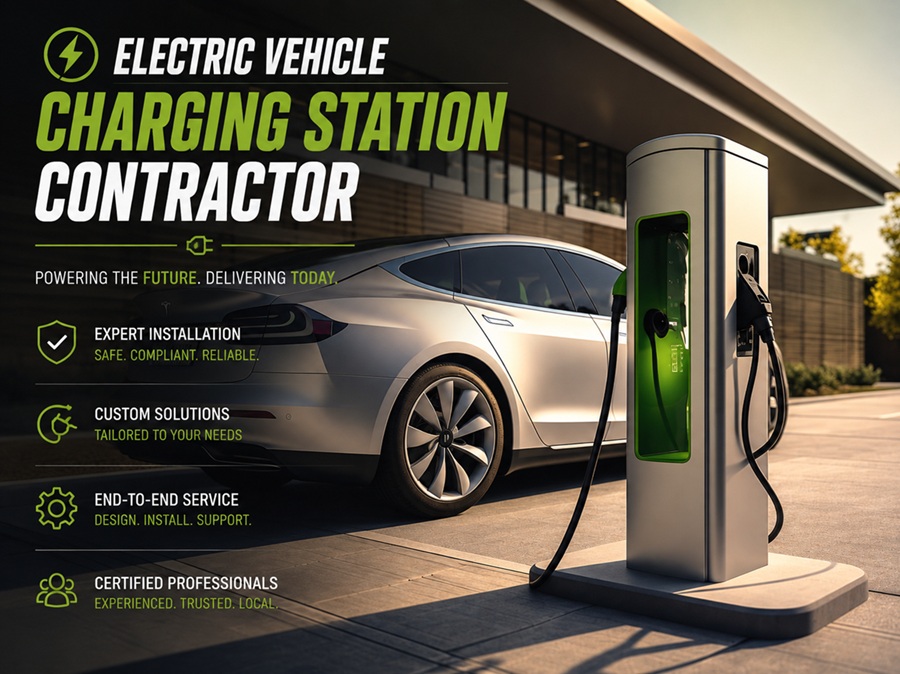

An electric vehicle charging station contractor is a qualified professional, typically a licensed electrician or specialized installation company, who installs EV charging stations safely and to code for homes and businesses, and choosing the right one is essential because EV charger installation involves significant electrical work. Because installing a charging station means working with your electrical system, often adding a dedicated high-power circuit, it must be done by a properly licensed and experienced contractor to ensure it is safe, compliant, and reliable. The right contractor assesses your needs, handles permits and inspections, and installs the charger correctly, while the wrong choice can lead to safety hazards and problems. Selecting a qualified, reputable EV charging contractor, by checking licensing, experience, and reviews, is the key to a smooth, safe installation.
As more drivers switch to electric vehicles, installing a charging station at home or a business has become a common project, but it is not a do-it-yourself electrical job for most people. Hiring the right contractor makes all the difference in getting a safe, code-compliant, reliable charging setup. This guide explains what an EV charging station contractor does, why hiring a qualified one matters, how to choose the right one, and what to expect from the process.
| What they are | Licensed pros who install EV charging stations |
| Usually | A licensed electrician or install company |
| Why hire one | Installation involves major electrical work |
| They handle | Assessment, permits, and safe installation |
| Serve | Both home and business installations |
| Choose by | Licensing, experience, and reviews |
| Wrong choice risks | Safety hazards and problems |
| Goal | A safe, compliant, reliable charger |
What an EV Charging Contractor Does
An EV charging station contractor handles the full job of getting a charging station properly installed, which is more involved than simply mounting a charger on a wall. Their role centers on the electrical work and the details that make an installation safe and functional.
A good contractor assesses your electrical system and needs, determines what is required to support the charger, obtains any necessary permits, installs the charging station and its dedicated circuit correctly and to code, and ensures the work passes inspection. They bring the licensing, expertise, and tools to do this safely. Essentially, they take a project that involves potentially hazardous electrical work and complex requirements and handle it professionally, so you end up with a charging station that works reliably and safely, whether at your home or your business.
Why Hire a Qualified Professional
Installing an EV charging station is not a typical DIY project, and hiring a qualified professional is important for reasons that come down to safety, compliance, and reliability. Understanding why helps you appreciate the value of the right contractor.
- The work involves significant electrical wiring, often a dedicated high-power circuit
- Improper electrical work poses serious risks of fire and shock
- Installations must meet electrical code and often require permits and inspection
- A professional ensures the charger is sized and wired correctly for safe operation
- Proper installation means reliable charging and protects your warranty and home
- Licensed contractors carry the expertise and insurance for the job
Residential vs Commercial Contractors
EV charging installations range from a single home charger to multiple stations at a business or public site, and contractors may specialize accordingly, so it helps to choose one suited to your project. Understanding the difference guides your selection.
| Project | Typical Scope | Contractor Fit |
| Home charging | A single charger and dedicated circuit | Residential EV installers |
| Business / workplace | Multiple stations and more capacity | Commercial EV contractors |
| Public / fleet | Larger infrastructure projects | Specialized commercial firms |
| Multi-unit / property | Shared or multiple chargers | Experienced commercial installers |
For a home installation, a qualified residential EV charger installer or electrician is typically what you need, while larger commercial or public projects call for contractors experienced in that scale and complexity.
How to Choose the Right Contractor
Choosing the right EV charging contractor is the most important decision in the process, since it determines the safety and quality of your installation. A few key criteria help you select a reputable, qualified professional.
- Proper licensing as an electrician or qualified installer, as required in your area
- Experience specifically with EV charging station installations
- Any relevant certifications, such as manufacturer or EV charging credentials
- Insurance to protect you and them during the work
- Good reviews, references, and a solid reputation
- Clear, detailed quotes so you understand the scope and cost
- Willingness to handle permits and inspections as part of the job
What to Expect From the Process
Knowing what to expect when working with an EV charging contractor helps the project go smoothly. Typically, the contractor begins with an assessment, evaluating your electrical system and where the charger will go, and advising on what is needed, including whether your electrical panel can support the charger or requires upgrades. They then provide a quote covering the work and equipment. Once you proceed, they obtain any required permits, perform the installation, wiring the dedicated circuit and mounting and connecting the charging station, and arrange for inspection where needed. Finally, they ensure the charger is working correctly. A good contractor communicates clearly throughout and leaves you with a safe, functional charging station, making the process straightforward for you.
Understanding the Costs
The cost of hiring an EV charging station contractor varies based on your specific situation, so it helps to understand what drives it. Major factors include the complexity of the installation, such as the distance from your electrical panel to the charger location and whether your panel needs upgrading to support the added load, along with the charger itself, permits, and local labor rates. A simple installation near an adequate panel costs less than one requiring significant electrical upgrades or long wiring runs. Because these factors vary widely, getting detailed quotes from qualified contractors is the best way to understand your costs, and confirming exactly what each quote includes lets you compare fairly. Investing in proper professional installation is well worth it for the safety and reliability it ensures.
Frequently Asked Questions
Do I need a contractor to install an EV charging station?
For most installations, yes. Installing an EV charging station involves significant electrical work, often a dedicated high-power circuit, that should be done by a licensed electrician or qualified EV charging contractor to ensure it is safe, code-compliant, and reliable.
What should I look for in an EV charging contractor?
Look for proper licensing, experience specifically with EV charger installations, relevant certifications, insurance, good reviews and references, clear detailed quotes, and a willingness to handle permits and inspections. These indicate a qualified, reputable professional.
How much does it cost to have an EV charger installed?
It varies with the installation’s complexity, the distance from your electrical panel, whether the panel needs upgrading, the charger, permits, and local labor rates. Getting detailed quotes from qualified contractors is the best way to understand your specific costs.
Is installing an EV charger a DIY job?
For most people, no. It involves significant electrical wiring with real fire and shock risks and must meet code, so it is best left to a licensed electrician or qualified EV charging contractor rather than attempted as a DIY project.
Questions to Ask Before Hiring
Before committing to an EV charging station contractor, asking the right questions helps you confirm they are qualified and understand exactly what you are getting. A short conversation up front prevents surprises and helps you compare contractors fairly.
Ask about their licensing and whether they are experienced specifically with EV charger installations, since general electrical experience is good but EV-specific experience is better. Confirm they carry insurance, and ask whether they handle permits and inspection as part of the job. Request a detailed written quote that spells out the scope, the equipment, and any potential extra costs like a panel upgrade, so you know what is included.
It is also worth asking how they will assess your electrical system, what charger options they recommend and why, how long the installation will take, and what warranty or support they offer on the work. A good contractor will answer these clearly and be transparent about the process and costs. Asking these questions not only helps you choose a qualified professional but also gives you a sense of how they communicate, which matters for a smooth project.
- Are you licensed and experienced with EV charger installs?
- Do you carry insurance, and do you handle permits and inspection?
- Can you provide a detailed written quote with all potential costs?
- How will you assess my electrical system and panel capacity?
- What warranty or support do you offer on the installation?
Final Thoughts
An electric vehicle charging station contractor is the qualified professional who makes sure your EV charger is installed safely, correctly, and to code, which matters because the work involves significant electrical wiring that is not a typical DIY job. The right contractor assesses your needs, handles permits and inspection, and delivers a reliable charging setup, while choosing well, by checking licensing, experience, certifications, insurance, and reviews, protects your safety and investment. Whether for your home or business, hiring a reputable, qualified EV charging contractor is the key to a smooth installation and years of dependable charging.