

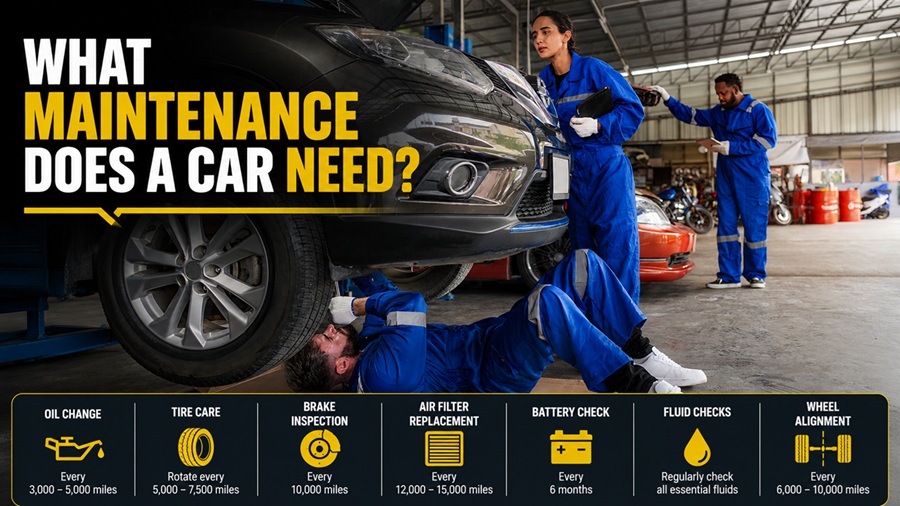

Every car needs a core set of regular maintenance to stay safe and reliable: routine oil and filter changes, tire care including rotation and correct pressure, brake inspection and service, regular fluid checks and replacements, filter changes, and battery, belt, and hose checks, all carried out at intervals based on mileage and time. The guiding principle is preventive maintenance, staying ahead of wear so small, cheap tasks prevent big, expensive breakdowns. While the exact schedule varies by vehicle, and your owner’s manual is the definitive guide, these essentials apply to virtually every car and are what keep it running smoothly for years.
Owning a car means maintaining it, but for many people it is not obvious exactly what needs doing or when. The good news is that car maintenance boils down to a manageable list of essentials performed on a regular schedule. This guide explains what maintenance a car needs, from the well-known oil change to the fluids and components that are easy to overlook, and when to tend to each, so you can keep your vehicle safe, reliable, and long-lasting.
| The essentials | Oil, tires, brakes, fluids, filters, battery |
| Approach | Preventive maintenance on a regular schedule |
| Oil | Regular oil and filter changes |
| Tires | Rotation, pressure, and tread checks |
| Brakes | Regular inspection and service |
| Fluids | Checked and replaced at intervals |
| Timing | Based on mileage and time |
| Definitive guide | Your vehicle’s owner’s manual |
The Idea of Preventive Maintenance
Before the specifics, it helps to understand the goal behind car maintenance: prevention. The whole point of maintaining a car is to stay ahead of wear and problems, replacing fluids and parts and catching issues before they cause a failure. A regular oil change is far cheaper than an engine repair, and a caught-early brake issue is far cheaper and safer than one ignored until it fails.
This preventive mindset is why maintenance follows a schedule based on mileage and time rather than waiting for something to break. By doing small, routine tasks regularly, you avoid the large, expensive, and sometimes dangerous consequences of neglect. Think of maintenance as a modest ongoing investment that protects the far larger investment of the car itself, and keeps you safe on the road.
Oil and Filter Changes
The most well-known maintenance task, changing the engine oil and oil filter, is also one of the most important. Oil lubricates and protects the engine, and over time it breaks down and gets dirty, so it must be replaced regularly. Fresh oil keeps the engine running smoothly and prevents the wear and damage that old, degraded oil allows. The interval depends on your vehicle and the type of oil it uses, with many modern cars using synthetic oil on longer intervals, so follow the schedule in your owner’s manual. Skipping oil changes is one of the fastest ways to damage an engine, making this a non-negotiable part of car care.
Tire Maintenance
Your tires are the only contact between the car and the road, so caring for them is essential for safety and performance. Tire maintenance involves several regular tasks that keep them safe and extend their life.
- Maintaining correct tire pressure for safety, handling, and fuel economy
- Rotating the tires periodically to promote even tread wear
- Checking tread depth and replacing worn tires
- Watching for uneven wear, which can signal alignment or other issues
- Getting a wheel alignment when needed for even wear and straight tracking
Brakes
Brakes are a critical safety system, so they need regular inspection and service. Over time, brake components like pads wear down and eventually need replacing, and other parts of the system require attention too. Having the brakes inspected regularly catches wear before it becomes dangerous or damages other components, and addressing issues promptly, such as replacing worn pads, keeps your stopping power reliable. Warning signs like squealing, grinding, a soft pedal, or longer stopping distances mean the brakes need attention right away. Because brakes are fundamental to safety, they are one area where you never want to fall behind on maintenance.
Fluids to Check and Replace
A car relies on several fluids beyond engine oil, and keeping them at the right level and condition is a key part of maintenance. Each has its own role and its own replacement interval, and neglecting them can lead to serious problems.
| Fluid | Its Role | Maintenance |
| Engine oil | Lubricates the engine | Change regularly per schedule |
| Coolant | Regulates engine temperature | Check and replace at intervals |
| Brake fluid | Transfers braking force | Check and replace as recommended |
| Transmission fluid | Lubricates the transmission | Service per the schedule |
| Power steering / other | Aid steering and systems | Check and top up as needed |
Filters, Battery, Belts, and Hoses
Several other components need periodic attention to keep a car healthy. Filters, including the engine air filter and cabin air filter, get dirty and need replacing so the engine breathes well and your cabin air stays clean. The battery has a limited lifespan and should be checked, with its terminals kept clean, and replaced when it weakens. Belts and hoses under the hood age, crack, and can fail, so they should be inspected and replaced before they break, since a failed belt or hose can leave you stranded or cause damage. These items are easy to overlook but are part of what a car needs to keep running reliably.
Following a Maintenance Schedule
The way to keep all of this straight is to follow a maintenance schedule, and every car comes with one in its owner’s manual. The manual specifies what to do and when, tailored to your specific vehicle, which is why it is the definitive guide rather than generic advice. Servicing based on mileage and time, and keeping records of what has been done, ensures nothing important gets missed. Whether you use a dealer, an independent shop, or handle some tasks yourself, the essential thing is consistency: following the recommended intervals is what keeps a car safe, reliable, and long-lasting, and protects its value over time.
Frequently Asked Questions
What are the most important car maintenance tasks?
The essentials are regular oil and filter changes, tire care (pressure, rotation, tread), brake inspection and service, checking and replacing fluids, changing filters, and checking the battery, belts, and hoses. These apply to virtually every car.
How do I know when my car needs maintenance?
Follow the schedule in your owner’s manual, which is based on mileage and time, and watch for warning signs and dashboard lights. Many cars also have maintenance reminders. Keeping records helps you know what is due next.
What happens if I skip car maintenance?
Neglecting maintenance leads to bigger, more expensive problems and safety risks, from engine damage due to old oil to brake failure from worn parts. Preventive maintenance is far cheaper and safer than repairing the failures that neglect causes.
Can I do car maintenance myself?
Some of it, yes. Checking fluids, tire pressure, and filters is DIY-friendly, and oil changes are doable with the right tools. More complex work like brakes and major services is best left to a qualified mechanic, but keep records either way.
Simple Checks You Can Do Between Services
Between scheduled services, a few quick checks you can do yourself help you catch problems early and keep your car in good shape. These take only minutes, require no special skills, and can save you from breakdowns or spotting issues before they grow.
Periodically check your tire pressure and look over the tires for wear or damage, since correct pressure affects safety, handling, and fuel economy. Peek under the hood to check fluid levels like oil and coolant when the engine is cool, and look for any obvious leaks or worn belts. Pay attention to how the car feels and sounds as you drive, since new noises, vibrations, or warning lights are early clues that something needs attention.
Keeping your car clean, inside and out, also protects it over time, and staying alert to dashboard warning lights lets you respond before a small issue becomes a big one. None of these replace scheduled professional service, but they are easy habits that complement it, helping you stay ahead of problems and keep your car reliable between visits to the shop.
- Check tire pressure and inspect tires regularly
- Check fluid levels and look for leaks when the engine is cool
- Notice new noises, vibrations, or warning lights early
- Keep the car clean to protect it over time
- Respond promptly to dashboard warning lights
Final Thoughts
So what maintenance does a car need? A manageable set of essentials done regularly: oil and filter changes, tire care, brake service, fluid checks and replacements, filter changes, and attention to the battery, belts, and hoses. The unifying principle is prevention, staying ahead of wear so small routine tasks prevent big, costly failures. Follow the schedule in your owner’s manual, watch for warning signs, and keep good records, and your car will reward you with safe, reliable, long-lasting service, all for a modest, steady investment of care.