

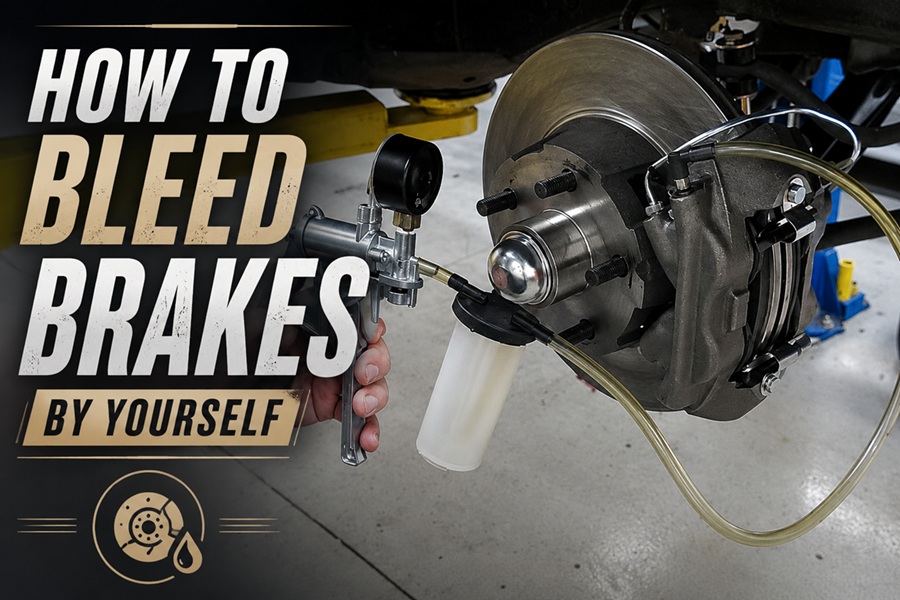

You can bleed brakes by yourself using a one-person method, such as a one-man bleeder kit with a check valve, a vacuum bleeder, or gravity bleeding, which lets you remove air from the brake lines without a helper to press the pedal. Bleeding brakes removes trapped air that causes a soft, spongy pedal and weak braking, restoring a firm pedal and proper stopping power, and the keys to doing it right are following your vehicle’s recommended bleeding sequence, using the correct brake fluid, keeping the master cylinder reservoir topped up, and never letting air back into the system. Because brakes are a critical safety system, though, this job demands care and confidence: if you are unsure at any point, or the pedal is not firm afterward, do not drive, and have a professional bleed or inspect the brakes instead.
Bleeding your brakes is a common maintenance task, done after brake work or when the pedal feels spongy, and while it traditionally takes two people, there are ways to do it solo. However, because it directly affects your ability to stop, it must be done carefully and correctly. This guide explains how to bleed brakes by yourself, the one-person methods, the correct approach, and the safety precautions that matter most, along with when to leave it to a professional.
| What it does | Removes trapped air from the brake lines |
| Why | Air causes a soft, spongy pedal and weak braking |
| One-person methods | Bleeder kit, vacuum bleeder, or gravity |
| Key rule | Follow your vehicle’s bleeding sequence |
| Fluid | Use the correct brake fluid for your vehicle |
| Reservoir | Keep the master cylinder topped up |
| Safety | Brakes are critical; test before driving |
| If unsure | Have a professional do it |
What Bleeding Brakes Does
Bleeding brakes is the process of removing air from the brake lines and hydraulic system, and understanding why it matters explains why doing it correctly is so important. Brakes work hydraulically, using fluid to transfer the force from your pedal to the brakes at each wheel, and this system needs to be free of air to work properly.
When air gets into the brake lines, whether from doing brake work, a fluid change, or low fluid, it makes the pedal feel soft or spongy and reduces braking effectiveness, because air compresses in a way brake fluid does not. Bleeding the brakes pushes this trapped air out, restoring a firm pedal and proper braking. This is why brakes are bled after certain repairs and when the pedal feels spongy, and why getting all the air out is essential to safe braking.
One-Person Bleeding Methods
Traditionally, bleeding brakes involves one person pressing the pedal while another opens and closes the bleeder valve, but several methods let you do it by yourself. Each uses a tool or technique to replace the need for a helper.
| Method | How It Works | Notes |
| One-man bleeder kit | A hose with a check valve stops air returning | Simple and popular for solo bleeding |
| Vacuum bleeder | Draws fluid and air out through the bleeder | Pulls air out from the valve |
| Pressure bleeder | Pushes fluid through under pressure | Feeds fluid from the reservoir |
| Gravity bleeding | Fluid slowly drips out, carrying air | Slow but needs no helper |
The Correct Bleeding Sequence
One of the most important aspects of bleeding brakes correctly is following the proper sequence, the order in which you bleed each wheel, because doing it in the wrong order can leave air in the system. Vehicles have a recommended bleeding sequence, which is specified in the vehicle’s service information, and it commonly follows a particular order relative to the master cylinder, though it varies by vehicle. Always follow the sequence specified for your specific vehicle rather than assuming, since using the correct order ensures air is properly purged from the entire system. Bleeding in the wrong sequence can mean a spongy pedal remains despite your effort, so this detail matters for getting a firm, safe pedal.
General Steps and Precautions
While the exact process depends on your method and vehicle, bleeding brakes by yourself follows a general pattern, and certain precautions are essential throughout. Always work from your vehicle’s service information for the specifics.
- Use the correct brake fluid specified for your vehicle, and keep it clean and sealed.
- Keep the master cylinder reservoir topped up throughout, so it never runs low and draws in air.
- Follow your vehicle’s recommended bleeding sequence, wheel by wheel.
- Using your chosen method, open the bleeder valve to let fluid and air out, then close it, keeping air from returning.
- Repeat at each wheel until the fluid runs clear and free of air bubbles and the pedal is firm.
- Check for leaks, confirm a firm pedal, and clean up spilled fluid, which is harmful to paint and surfaces.
Never let the reservoir run dry, avoid getting air back into the system, and keep brake fluid off painted surfaces and away from skin and eyes. Brake fluid is also hygroscopic and should be handled and disposed of properly.
Safety Comes First
Because brakes are absolutely critical to your safety, bleeding them by yourself must be approached with the utmost care, and safety takes priority over doing it yourself. The whole point of bleeding brakes is to ensure they work properly, so anything less than a correct result is not acceptable. After bleeding, you must confirm the brake pedal is firm, not soft or spongy, before driving, and test the brakes carefully at low speed in a safe area before relying on them. If the pedal is not firm, if you suspect air remains, or if anything seems wrong, do not drive the vehicle, and have a professional bleed and inspect the brakes. There is no room for guesswork or hoping it is fine when it comes to braking, so if you are ever unsure, err firmly on the side of professional help.
When to Have a Professional Do It
While bleeding brakes yourself is achievable, there are clear situations where you should have a professional handle it instead, and recognizing them is part of being a responsible DIYer. If you are not fully confident in the procedure, if you cannot achieve a firm pedal, or if your vehicle has a complex braking system, such as certain ABS systems that may require special equipment to bleed properly, a professional is the right choice. Likewise, if the spongy pedal points to a deeper problem like a leak or a failing component, that needs professional diagnosis. Given that brakes are a critical safety system, having a qualified mechanic bleed or inspect your brakes is always a sound decision when there is any doubt, and it provides peace of mind that your brakes will perform when you need them.
Frequently Asked Questions
Can you bleed brakes by yourself?
Yes, using one-person methods like a one-man bleeder kit with a check valve, a vacuum bleeder, a pressure bleeder, or gravity bleeding, which remove air without a helper pressing the pedal. It must be done carefully, following your vehicle’s sequence, with a firm pedal confirmed before driving.
Why do brakes need to be bled?
Air trapped in the brake lines makes the pedal soft or spongy and reduces braking, because air compresses when brake fluid does not. Bleeding removes the air to restore a firm pedal and proper braking, which is why it is done after brake work or when the pedal feels spongy.
What order do you bleed brakes in?
Follow the specific bleeding sequence recommended for your vehicle, which is given in its service information and varies by vehicle. Using the correct order ensures air is fully purged; bleeding in the wrong sequence can leave air in the system and a spongy pedal.
Is it safe to bleed your own brakes?
It can be if done correctly and carefully, but brakes are a critical safety system, so you must confirm a firm pedal and test carefully before driving. If you are not confident, cannot get a firm pedal, or have a complex system, have a professional do it.
Final Thoughts
Bleeding brakes by yourself is possible with one-person methods like a bleeder kit, vacuum bleeder, or gravity bleeding, and it restores a firm pedal by removing trapped air. Doing it right means following your vehicle’s bleeding sequence, using the correct fluid, keeping the reservoir topped up, and never letting air back in. Above all, because brakes are critical to your safety, you must confirm a firm pedal and test carefully before driving, and if you are ever unsure or cannot get a solid pedal, do not drive and have a professional handle it. When it comes to brakes, careful, correct work and a healthy respect for safety are everything.